
Masking & Autistic Burnout
Why your child might seem to “hold it together” in one setting but struggle in another—and what that tells us.
JUMP TO SECTION
What Is Masking?
Masking is when an autistic child hides or suppresses parts of themselves to fit in, meet expectations, or avoid drawing attention. It’s not dishonesty—it’s effort. A lot of it.
Masking can look like:
Copying how other kids speak, play, or interact
Smiling or nodding even when confused or overwhelmed
Forcing eye contact or sitting still even when it feels uncomfortable
Waiting until they’re alone or with someone they trust to show their real feelings
Holding in movement (like fidgeting, pacing, or stimming)
Many children who mask appear calm or easygoing during the day—but release all that built-up tension once they’re in a safe space. Masking often comes first, and burnout can set in when the effort becomes too heavy to carry. It’s a sign of trust, exhaustion, and effort catching up.
What Is Autistic Burnout?
Autistic burnout is a state of deep mental, emotional, and physical fatigue that builds up over time. It often happens when a child is managing overwhelming demands—socially, sensorily, or communicatively—without enough support or recovery.
You might notice:
Increased overwhelm after school or busy days
A temporary step back in independence, language, or engagement
Withdrawing from activities they typically enjoy
More emotional intensity or greater sensitivity to sounds, lights, or touch
Needing more time alone or becoming easily frustrated
This isn’t a child falling apart. It’s a nervous system saying, “I’m full.” It’s the body’s way of asking for rest and reconnection.
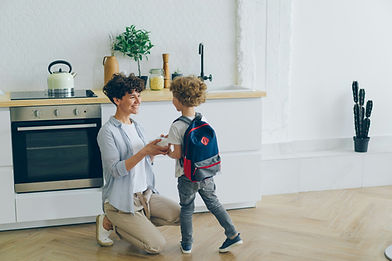
The Backpack Metaphor: Why It’s Not Inconsistency
Imagine your child carries an invisible backpack throughout the day.
Every demand, transition, or sensory stressor adds something to the pack—a pebble, a rock, sometimes a brick.
-
Navigating noisy hallways or bright lights
-
Interpreting tone of voice or peer dynamics
-
Holding in movement or emotions to stay “appropriate”
-
Trying to focus while feeling anxious or overstimulated
By the time they’re home (or even halfway through the day), that backpack might be full. Then something small—a minor change in plans, a loud noise, or a simple request—can feel like too much. The backpack overflows.
That’s not overreaction. That’s accumulated effort reaching capacity.
And often, others never saw how heavy it was to begin with.
Burnout can happen anywhere—it’s about the buildup, not the place.
What Helps
Supporting a child through masking and burnout is about understanding what fills their backpack—and how to lighten the load.
Adjust expectations and reduce demands
-
Give more support in places that are overwhelming (e.g., school, camp, transitions)
-
Use visual schedules, sensory tools, or previewing when helpful
-
Don’t expect them to “bounce back” just because they look okay on the outside
Build in recovery time
-
After school or busy outings, offer low-demand time: solo play, movement, or just quiet
-
Let their nervous system reset before diving into more interaction
Create spaces where unmasking is safe
-
At home, in therapy, or trusted settings, allow your child to stim, rest, speak freely, or ask for breaks
-
Affirm that their natural way of being is valid and welcome
Watch for early signs of overload
-
Irritability, withdrawal, or increased sensitivity may be signs they’re reaching their limit
-
Instead of asking “Why are they reacting like this?” try “What might they have been holding in all day?”
Acknowledge and name the pattern
Try saying:
“You’ve worked so hard today. You don’t have to keep holding it in here.”
“It’s okay to be real with me. You’re safe.”
Small adjustments can make a big difference in reducing burnout and helping your child feel safe.

Why This Matters
Understanding masking and burnout helps us respond to our children with empathy, not judgment. It helps caregivers, educators, and providers shift the focus from surface-level behavior to the real experiences underneath.
And most importantly, it tells our children:
You don’t have to perform to be accepted.
You don’t have to hide to be loved.
You don’t have to carry it all alone.